Wednesday, August 3, 2011

Akron, Ohio

After watching fireworks celebrating America's independence, an Akron, Ohio family gathered with some friends and say they were attacked by a group of teens, yelling racial epithets.
Imagine if you will, hanging out with your friends on a front lawn, chatting about what a nice night you had just had, how great the fireworks were, and maybe what your plans were for the 4th of July weekend.
All of a sudden, a teen comes up and blindsides and assaults one of your friends, a melee ensues, with a group of teens numbering up to perhaps 50, swarming you, your family and friends. Punches were thrown. Kicks were delivered. A general beat down was happening, and all the while, the teens were yelling "This is our world." "This is a white world."

Akron Ohio has an abundance of attractions and sites for visitors traveling to the area. There is a variety of accommodation available, great restaurants, a host of meeting facilities and many opportunities for outdoor recreation. Akron Ohio is also home to many fantastic museums such as the National Inventors Hall of Fame and the Akron Art Museum which features works from 1850 through to the present. Boasting many things to do and see Akron Ohio, being the one of the biggest cities in the U.S., offers some of the best amenities in North America.

When planning your Akron travel consider a one hour Ohio cruise via Cuyahoga Riverboat trips. Learn the history of the river aboard a Front Runner or Cuyahoga Cruiser. Pair a cruise with a trip to the Cuyahoga Valley Scenic Railroad aboard a vintage coach for a full day out. Choose from one of the destinations offered during Akron travel cruise such as Hale Farm andVillage, the Historic Village of Peninsula or Quaker Square and delve into city history.


Enjoy an architectural tour during Akron travel and visit the 1830's Greek revival mansion built by Col. Simon Perkins Jr., the son of Akron's founder. Cross the street and visit John Brown Home and tour the home of the famous slave abolitionist. Featured inside this home is a reconstruction of a captain's quarter aboard a canal boat, antebellum period photos and various temporary exhibits.

The Akron Canton Airport is where your flight to Akron will land. This airport is the alternative to the Cleveland Hopkins Airport. The Akron airport offers fewer lines, nearby parking, smaller crowds and much less confusion! If looking for a flight to Akron there are many great deals to be had when flying in from another American city with prices often less than $200.00 for round trip tickets.


There are over 215 domestic flights weekly leaving from Akron-Canton as well as 14 non-stop flights departing weekly. The most popular incoming flights are from cities such as New York, Seattle, L.A. and Boston. When looking for a flight to Akron AirTran Airways offers some of the most affordable prices throughout the continental U.S.

The Akron Zoo is open in November to April from 11:00am to 4:00pm and May to October from 10:00am to 5pm. Admission is just $9.00 for adults and $5.50 for children 2 to 14 years. Boasting exhibits which are home to an array of species the Akron Zoo includes llamas, jaguars, lions, eagles, exotic bears, snow leopards and more. There are many events happening through the year at the Akron Zoo so be sure to check the calendar before visiting.

Akron hotels on the west side include the Hampton Inn which is only 25 miles away from both area airports. This Akron hotels nearby attractions include Cuyahoga Valley Scenic Railroad, the Rock and Roll Hall of Fame and nearby cities offer many more sights. Amenities include 24 hour front desk, cocktail lounge, fitness center, guest laundry, two onsite restaurants and more. $72.00 is the starting rate but be sure to check before booking.

Beijing China Airport

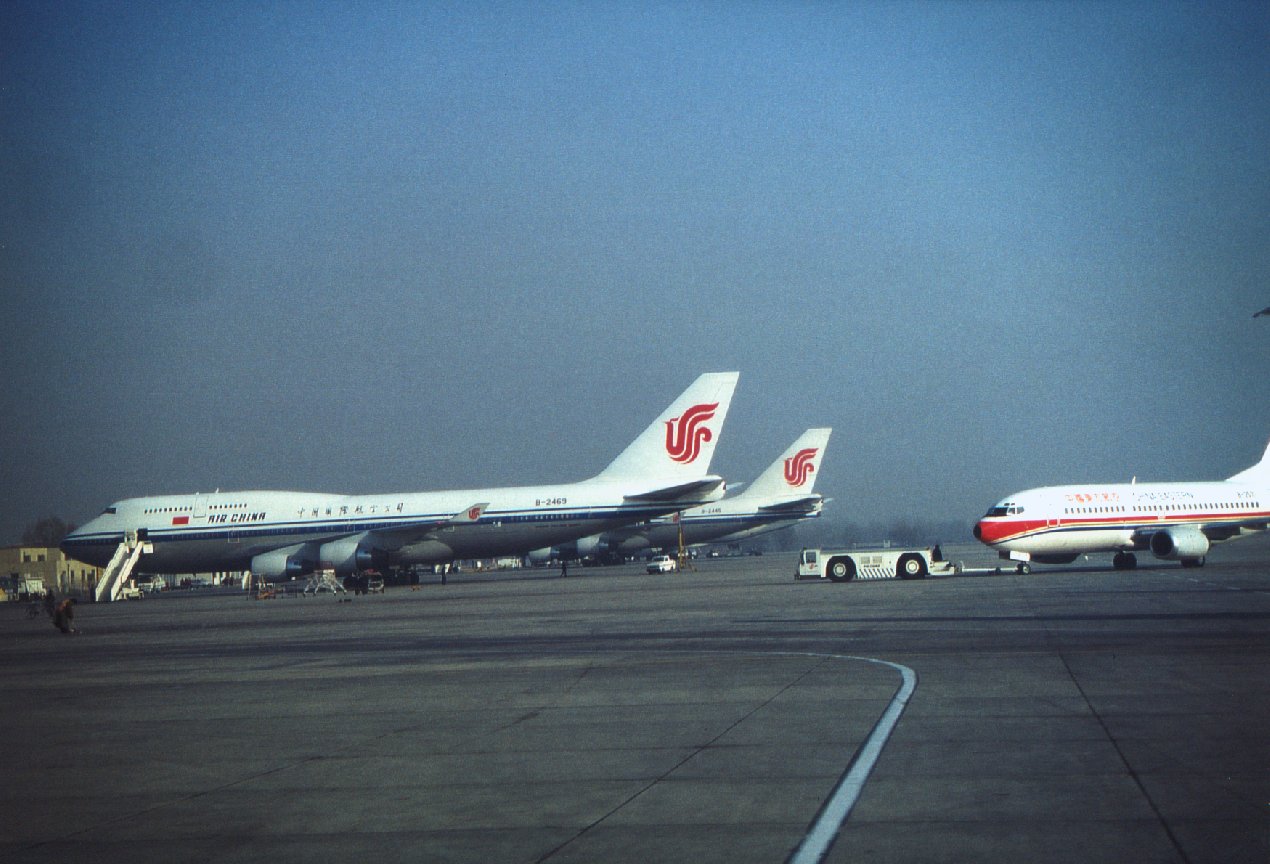
After 4 years the Beijing Airport -currently the biggest one in the world- is finished, just in time for the 2008 Olympics. The airport, designed by Foster + Partners, turned out to be a very efficient building in terms of in terms of operational efficiency, passenger comfort, sustainability and access to natural light.

As an interpretation of traditional chinese culture the roof of the airport has a dragon-like form. According to Norman Foster [...] this is a building borne of its context. It communicates a uniquely Chinese sense of place and will be a true gateway to the nation. This is expressed in its dragon-like form and the drama of the soaring roof that is a blaze of ‘traditional’ Chinese colours – imperial reds merge into golden yellows. As you proceed along the central axis, view of the red columns stretching ahead into the far distance evokes images of a Chinese temple.

Project description

Located between the existing eastern runway and the future third runway, Terminal 3 and the Ground Transportation Centre (GTC) together enclose a floor area of approximately 1.3 million m2, mostly under one roof. The first building to break the one million square meter barrier, it will accommodate an estimated 50 million passengers per annum by 2020.

Beijing China Airport
Beijing China AirportAlthough conceived on an unprecedented scale, the building’s design aims to resolve the complexities of modern air travel, combining spatial clarity with high service standards. It will be friendly and uplifting for the passenger as well as easy to navigate. Comprising three connected, light-filled volumes – T3A, B and C – the simple, symmetrical diagram fans out at either end to accommodate the arrivals and departure halls for T3A (processing terminal and domestic gates) and T3B (international gates). The satellite T3C (domestic gates) occupies the centre of the diagram. This arrangement is an efficient means of maximising the perimeter, so increasing the capacity for aircraft stands, while maintaining a highly compact and sustainable footprint.
Beijing China Airport
Beijing China AirportThe single unifying roof canopy is perforated with skylights to aid orientation and bring daylight deep into the building. The colour palette moves through 16 tones from red at the entrance at T3A through to orange and finally yellow at the far end of T3B. This establishes a subtle zoning system that breaks down the scale of the building and enables easy wayfinding. This palette is also applied north to south in the ceiling above the arrivals and departures halls, heightening the sense of curvature in the roof plane.

Connections between T3A and T3B take place on a high speed automated people mover (APM) which travels at up to 80kph, with a journey time of just two minutes. The APM is easily accessed from the main departure level and set within a landscaped ‘green’ cutting, exposed to daylight and views up and through the building, all of which helps to maintain a sense of orientation.

Beijing China Weather

At last summer's Olympics, Beijing came out on top in the medal count and on the balance sheets. But as the city's air pollution again pushes dangerous levels, two new reports point out that pollution during the Games was concealed by poor measurements and mitigated more by weather than by the government's massive interventions.

While pollution levels appeared to reach record lows for Beijing, the Olympic air was actually 3.5 times worse than that of recent Olympic cities like Athens, Atlanta and Sydney, and often exceeded what the World Health Organization considers safe.

One report, by Steve Andrews and published by the Wilson Center, reiterates conclusions that Andrews made and we reported last year: that China is misinforming the public by massaging its pollution numbers to look lower than they are and not including crucial, finer pollutants in its calculations, PM 2.5 and ozone.

Beijing and other Chinese cities rely on an air pollution index (API) in which a score of 100 or lower indicates air quality as 'good.' By that measurement, all 17 days of Olympic events in Beijing were deemed satisfactory, or "blue sky" days. Overall, the city counted a record high of 274 good air days in 2008.

Beijing China Weather
Beijing China WeatherNevertheless, during the Olympics, as another study by researchers from Oregon State University and Peking University found, coarser particulate matter, PM 10 (particles with a diameter of 10 micrometers or less, or one-seventh the width of a human hair), exceeded levels that the WHO considers safe about 81 percent of the time.

Meanwhile, fine particle pollution (PM 2.5) exceeded WHO guidelines 100 percent of the time.

Beijing's Olympic pollution exceeded an average day in Los Angeles by two to four times, and was higher than pollution levels during previous Olympics in Athens, Atlanta, and Sydney.

The American-Chinese study also determined that China's drastic air clean-up, part of a $20 billion "greening" effort that included banning half the city's 3.3 million vehicles, halting most construction and closing dozens of factories, had less of an effect on pollution than did weather during August.

Meteorological conditions, such as rainfall and strong winds from the north and northwest, accounted for 40% of the variation in concentrations of PM 10, while pollution control measures accounted for only 16 percent, according to the study.

But meterological conditions were not simply an act of god (this is, after all, officially a secular country). No doubt recognizing the importance of the weather in clearing the air, Beijing officials even called in the cloud-seeding guns to force rain on some days.
Beijing China Weather
Beijing China WeatherAndrews study indicates that the use of API and "Blue Sky" day measurements has kept the pressure on officials across China to push data from just above the 100 mark to just under. Thus, a polluted day becomes a "blue sky" day.

Andrews also caught Beijing moving its air sampling stations to less-trafficked areas to create the appearance of less pollution.

The report also points out that cities managed to make the grade because standards for NO2 were loosened in 2000. Though Beijing and Guangzhou made the grade in 2006, if 1996 standards had been used, they would have exceeded the annual average NO2 standard by 65 percent and 67 percent, respectively.

The Good News
It's tempting to see China's Olympic pollution efforts as further confirmation of Beijing's tendency to cover up the facts.

But if there is silver lining of China's massive Olympic pollution experiment, it's the way it has drawn more attention than ever to the country's toxic air, and demonstrated that even drastic temporary measures can't compensate for long-term, sustainable improvements in pollution monitoring and reduction.

Earlier this month, environmental officials indicated that ozone and PM 2.5 would be incorporated into an updated monitoring regime next year, state media reported. From Jian Wang, an official with the environment ministry's pollution-prevention division, we have this breath of fresh air:

Beijing China Skyline

The “Life quality index” used to evaluate Chinese cities is comprised of 60 % objective factors (income per capita, inflation rates, green areas etc.), and 40% subjective factors (resident opinions on the city and quality of life they currently have).

To give you an idea of what that 8th place means, Hohot (the capital of Inner Mongolia) is actually ranked higher on the index. Ouch.

Li Xia, an anthropologist, provides a few reasons why Beijing may be ranked so low "Residents would feel much better about it if the management of the city would improve…not only is traffic bad, but there are not enough green places….”

We did it! We're #1! Err actually were #2, but at least we beat those big, smelly, good for nothing, uncivilized louts from Beijing! According to a new study conducted by the Institute of Economics of the Chinese Academy of Social Sciences and the Capital University of Economics and Business (CUEB), “Guangzhou tops Chinese cities with a Life Quality Index of 64.07, followed by Shanghai's index of 60.5 and Nanjing's index of 59.49.

Beijing ended up with a Life Quality Index of 56.23, ranking eighth out of 30 provincial or regional capital cities.”

The “Life quality index” used to evaluate Chinese cities is comprised of 60 % objective factors (income per capita, inflation rates, green areas etc.), and 40% subjective factors (resident opinions on the city and quality of life they currently have).
Beijing China Skyline
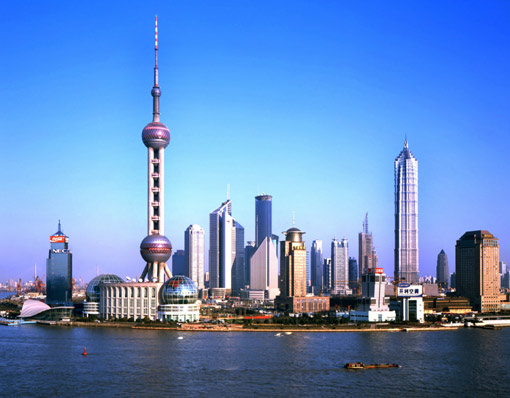
Beijing China SkylineTo give you an idea of what that 8th place means, Hohot (the capital of Inner Mongolia) is actually ranked higher on the index. Ouch.

Li Xia, an anthropologist, provides a few reasons why Beijing may be ranked so low "Residents would feel much better about it if the management of the city would improve…not only is traffic bad, but there are not enough green places….”
Beijing China Skyline
Beijing China SkylineEconomics of the Chinese Academy of Social Sciences and the Capital University of Economics and Business (CUEB), “Guangzhou tops Chinese cities with a Life Quality Index of 64.07, followed by Shanghai's index of 60.5 and Nanjing's index of 59.49.

Beijing ended up with a Life Quality Index of 56.23, ranking eighth out of 30 provincial or regional capital cities.”

The “Life quality index” used to evaluate Chinese cities is comprised of 60 % objective factors (income per capita, inflation rates, green areas etc.), and 40% subjective factors (resident opinions on the city and quality of life they currently have).

To give you an idea of what that 8th place means, Hohot (the capital of Inner Mongolia) is actually ranked higher on the index. Ouch.

Beijing Chicken

In baccarat, the number 9 is a winner. At Caesars Palace, around the corner from the baccarat tables, that auspicious number is paying delicious dividends at a beyond-stylish Chinese restaurant called Beijing Noodle No. 9.

In Los Angeles, the San Gabriel Valley spoils residents with a wealth of restaurants showcasing regional Chinese cooking. Dozens of unique Chinese options exist in the Valley, and while a few of them meet the culinary standards of Beijing Noodle No. 9 Executive Chef Li Yu, none of them can match their Vegas counterpart’s look and feel. Not even close.

Beijing Chicken
Beijing Chicken
Beijing ChickenThe only dish that really fell flat was the kung pao chicken. The ingredients weren’t noticeably superior and the chef could have ratcheted up the spice at least a couple notches.

Beijing Noodle No. 9 had style points to spare and delivered several standout dishes. The price point was about double what you’d find in L.A.’s San Gabriel Valley. Then again, the ingredients were generally higher grade. If the owners ever want to expand, Beijing Noodle No. 9 would play great in a section of Los Angeles like West Hollywood or Beverly Hills.
Beijing Chicken
Beijing Chicken
Beijing Chicken
Beijing ChickenWe ate at Beijing Noodle No 9 for lunch on Friday May 15, 2009. It was my favorite restaurant of the week, and we ate at greats like Olives and Prime in the Bellagio, and Diego at the Grand. The Noodle restaurant was just simply delicious without trying too hard. The iced tea alone was enough to bring me back again, but handmade noodles and a gorgeous Kung Poa Shrimp didn’t hurt, either. Service was top notch, and don’t forget to try the out of this world Sesame Creme Caramel with an Almond Butter Cookie for dessert. Take-out is also available for a quiet night in. Now if only they delivered to Pittsburgh…

Tuesday, August 2, 2011

Another Game, Another Late Inning Error Adds to the Mets Losing Streak

Unable to win at home. That is the story of the 2011 New York Mets. 22-28 at Citi Field, deflating large crowds with costly errors.
Monday- Daniel Murphy fails to throw to first in a rundown situation. What would have been 2 outs with an open base and the pitcher on deck became a hot hitter batting with one out and the bases loaded. The result was a deceive 10th inning grand slam. The Mets lost 7-3.
Then Tuesday night- it was deja vu. On a routine ground ball, Justin Turner threw wide to Lucas Duda at first base and the Marlins scored 2 runs to take a 4-3 lead in the ninth inning. Florida held on to the lead and the Mets built onto their losing streak, having lost 4 games in a row to the dreadful Nats and Fish.
This is the worst 5 days the Mets could have imagined. They are 7.5 games back in the Wild Card race and 14+ games back in the NL East.
In a year full of one-run losses, this one may just be the worst. Excruciating.

Massive Humanitarian Crisis in Somalia

The situation is growing bleaker by the day, with tens of thousands of Somalis already dead and more than 500,000 children on the brink of starvation.
From The New York Times

The Shabab Islamist insurgent group, which controls much of southern Somalia, is blocking starving people from fleeing the country and setting up a cantonment camp where it is imprisoning displaced people who were trying to escape Shabab territory.

The group is widely blamed for causing a famine in Somalia by forcing out many Western aid organizations, depriving drought victims of desperately needed food.

Every morning, emaciated parents with emaciated children stagger into Banadir Hospital, a shell of a building with floors that stink of diesel fuel because that is all the nurses have to fight off the flies. Babies are dying because of the lack of equipment and medicine. Some get hooked up to adult-size intravenous drips — pediatric versions are hard to find — and their compromised bodies cannot handle the volume of fluid.

Most parents do not have money for medicine, so entire families sit on old-fashioned cholera beds, with basketball-size holes cut out of the middle, taking turns going to the bathroom as diarrhea streams out of them.

“This is worse than 1992,” said Dr. Lul Mohamed, Banadir’s head of pediatrics, referring to Somalia’s last famine. “Back then, at least we had some help.”

Aid groups are trying to scale up their operations, and the United Nations has begun airlifting emergency food. But many seasoned aid officials are speaking in grim tones because one of Africa’s worst humanitarian disasters in decades has struck one of the most inaccessible countries on earth. Somalia, especially the southern third where the famine is, has been considered a no-go zone for years, a lawless caldron that has claimed the lives of dozens of aid workers, peacekeepers and American soldiers, going back to the “Black Hawk Down” battle in 1993, spelling a legacy that has scared off many international organizations.

“If this were Haiti, we would have dozens of people on the ground by now,” said Eric James, an official with the American Refugee Committee, a private aid organization.

But Somalia is considered more dangerous and anarchic than Haiti, Iraq or even Afghanistan, and the American Refugee Committee, like other aid groups, is struggling to get trained personnel here.

“It is safe to say that many people are going to die as a result of little or no access,” Mr. James said.

This leaves millions of famished Somalis with two choices, aside from fleeing the country to neighboring Kenya or Ethiopia, where there is more assistance. They can beg for help from a weak and divided transitional government in Mogadishu, the capital. Just the other day there was a shootout between government forces at the gates of the presidential palace. “Things happen,” was the response of Abdiweli Mohamed Ali, Somalia’s new prime minister.

Or they can remain in territory controlled by the Shabab, who have pledged allegiance to Al Qaeda and have tried to rid their areas of anything Western — Western music, Western dress, even Western aid groups during a time of famine.

Much of the Horn of Africa, which includes Kenya, Somalia, Ethiopia, Eritrea and Djibouti, has been struck this summer by one of the worst droughts in 60 years. But two Shabab-controlled parts of southern Somalia are the only areas where the United Nations has declared a famine, using scientific criteria of death and malnutrition rates.

People from those areas who were interviewed in Mogadishu say Shabab fighters are blocking rivers to steal water from impoverished villagers and divert it to commercial farmers who pay them taxes. The Shabab are intercepting displaced people who are trying to reach Mogadishu and forcing them to stay in a Shabab-run camp about 25 miles outside the city. The camp now holds several thousand people and receives only a trickle of food.

“I was taken off a bus and put here,” said a woman at the camp who asked not to be identified.

Several drought victims who have succeeded in making it to Mogadishu said that the Shabab were threatening to kill anyone who left their areas, either for refugee camps in Kenya and Ethiopia, or for government zones in Somalia, and that the only way out was to sneak away at night and avoid the main roads.

A few years ago, the Shabab began banning immunizations, deeming them a Western plot to kill Somali children. Now countless unvaccinated children are dying from measles and cholera as tens of thousands of malnourished, immunity-suppressed people flee the drought areas and pack into filthy, crowded camps.

The other day, Kufow Ali Abdi, a destitute herder who lost all his cattle, trudged out of Banadir Hospital, gently carrying a small package in his arms wrapped in blue cloth. It looked almost like a swaddled newborn but it was the opposite. It was the body of his 3-year-old daughter, Kadija, who had just succumbed to measles.

“I just hope they can save the others,” he said, referring to his two remaining children, down to skin and bone.

The magnitude of suffering could shift the political landscape, which has been dominated by chaos since 1991, when clan warlords overthrew the central government and then tore apart the country. The Transitional Federal Government — the 15th attempt at a government — is trying to assert itself and beat back the Shabab, and the famine and attendant relief effort could mean an enormous opportunity.

“It could be a face-lift for them, an opportunity to deliver services and show they are committed,” said Sheik Abdulkadir, a militia leader. “But if a lot of people die here, people will say it’s the government’s fault.”

The famine could affect the Shabab as well, deepening the fissures in their organization. Shabab leaders are now beginning to cut their own deals in the face of mass starvation. Unicef recently delivered a planeload of food and medicine to Baidoa, a Shabab stronghold. In Xarardheere, another Shabab-controlled town and a notorious pirate den, a Shabab commander said in an interview on Saturday that he would welcome Western aid organizations despite the anti-Western policies imposed by his leadership, which has been hit by the deaths of several prominent figures recently.

Sheik Yoonis, a Shabab spokesman, said in an e-mail that the declaration of a famine was “an exaggeration.” He said that Shabab fighters were not imprisoning people in the camp, but that the people were attracted to it by “this sense of serenity and security.” He also denied that the Shabab were diverting river water or scaring away aid agencies.

Still, many aid organizations are reluctant to venture into Shabab areas because of the obvious dangers — the Shabab have killed dozens of aid workers — and because of American government restrictions. In 2008, the State Department declared the Shabab a terrorist group, making it a crime to provide material assistance to them. Aid officials say the restrictions have had a chilling effect because it is nearly impossible to guarantee that the Shabab will not skim off some of the aid delivered in their areas.

Even United Nations contractors have been accused of siphoning food aid, resulting in extensive investigations and cuts in life-saving assistance.

Western aid agencies are now trying to work through Islamic and local organizations as much as possible, but the Somali partners do not usually have as much technical expertise. And heavy fighting has erupted in Mogadishu again, making it dangerous even for Somali aid workers.

“Somalia is one of the most complicated places in the world to deliver aid, more complicated than Afghanistan,” said Stefano Porretti, who heads the World Food Progam’s efforts in Somalia and recently worked in Afghanistan.