Sunday, June 28, 2009

Enjoy The Tower of London


The Tower of London
by Paul Lowman and Katrell Morgan
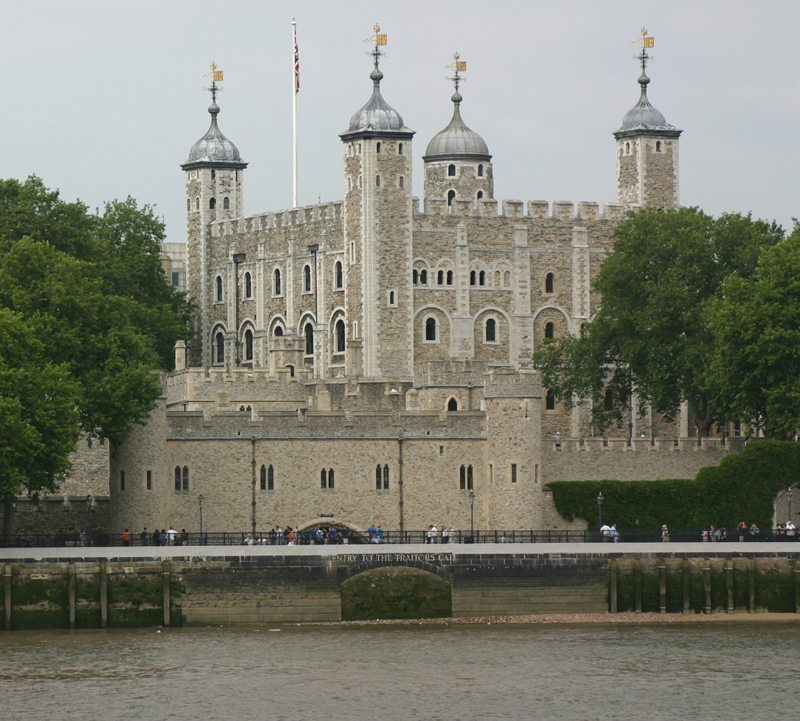
The Tower of London is a complex located on the Thames River in London. It has a rich history dating back to 1066, when William of Normandy decided to build the White Tower after he had taken over the kingdom of England. It was built and completed by Gundulf, the bishop of Rochester, in the year 1078. The Tower has been used as a royal residence as well as for a prison. Executions were held in the central keep and outside the Tower on Tower Hill. Yeoman guards now stand outside this popular tourist attraction.

The Tower of London is a complex made up of many different sections. The Tower is surrounded by a moat on three sides and the Thames River on the fourth. The outside fortifications consist of Legge's and Brass Mount. The inner fortifications, called the Ballium Wall, have 12 towers: the Bloody Tower, the Wakefield Tower, the Bell Tower, the Lanthorn Tower, the Salt Tower , the Broad Arrow Tower, the Constable Tower, the Martin Tower, the Brick Tower, the Bowyer Tower, the Flint Tower, the Devereux Tower, and the Beauchamp Tower. The Bloody Tower was named after the murder of the English child king Edward V and his brother, Richard Plantagent, Duke of York, which occurred in this tower. The Record, or Wakefield Tower, was where the records were formerly kept, and where the royal regalia, or Crown Jewels, are currently kept. The Devereux Tower is named for its most famous prisoner, Robert Devereux, Earl of Essex, who was held there before his execution for treason in 1601. The Jewel Tower was named for once holding the royal regalia.

The royal apartments at the Tower of London were used as guest rooms for visits by the court, but mostly the fortress was used as a state prison. The earliest of the prisoners held there was Rannulf Flambard, Bishop of Durham. Others who were once imprisoned in the Tower are kings and princes, archbishops and abbots, queens and murderesses, traitors and saints, and freebooters and counterfeiters. The kings of Scotland and France were held there for ransom after their defeats in battle. It was used as a prison as late as World War II.

Many torture devices were made for the Tower. One was the rack, which would stretch out a person to a foot longer than his original height. There were also the scaffold and gallows, which were put up on Tower Hill in order to execute people. This apparatus was the most commonly used device for excecuting others. Most prisoners were beheaded or hanged, some were killed trying to escape, or they were murdered. Anne Boleyn and Catherine Howard, wives of Henry VIII, were publicly executed on Tower Hill.
The Tower of London

by Paul Lowman and Katrell Morgan
Today the Tower of London is a popular tourist sight where the crown jewels are kept. They are guarded in the Jewel House in the Waterloo Block. The Tower of London also holds a museum of old armor and weaponry used by the people in the Elizabethan period. Among them are many different styles of armor from all around Europe and weaponry such as cannons and duelling pistols. A popular feature of the Tower of London is the Yeomen of the Guard, known as Beefeaters. These guards wear colorful uniforms from the Tudor period. There are about 40 of these guards who serve as officers of the Army, Royal Marines, or Royal Air Force. They are sworn into their office as Yeomen Extraordinary of The Queen's Bodyguard of the Yeomen of the Guard, which was founded by Henry VIII in 1485. The yeomen's closing ceremony at the end of each day is a popular tourist attraction.

The Tower of London is one of the most important architectural sites in London. It is the home of the Yeoman guards, along with the crown jewels. It has a vast array of influences from the different cultures who added to this remarkable building. Now it has changed into the popular tourist sight that is a must-see because of its rich history and cultural variety.

Thursday, June 18, 2009

Enjoy The Unique Beach of Daytona Beach


Daytona Beach is one of the most unique beaches in the world; it is the only place I know of where driving the family sedan along the beach is relished and even celebrated. While I give such activity low marks in terms of the best overall beach, this beach cruising is why Daytona is called the "World's Most Famous Beach." The fine, hard-packed sand along this incredibly wide beach was once used for car racing, attracting such notables as Henry Ford and Louis Chevrolet who came to test their engines, trot out the new models, and set new speed records. Daytona Beach is still the world center for racing, but today the cars roar at high speeds on a proper, paved racetrack inland; the beach speed limit is set at 10 miles per hour. In the last few years, beach driving has been banned on two areas on the north and south ends of this 23-mile stretch of sand.

Tuesday, June 16, 2009

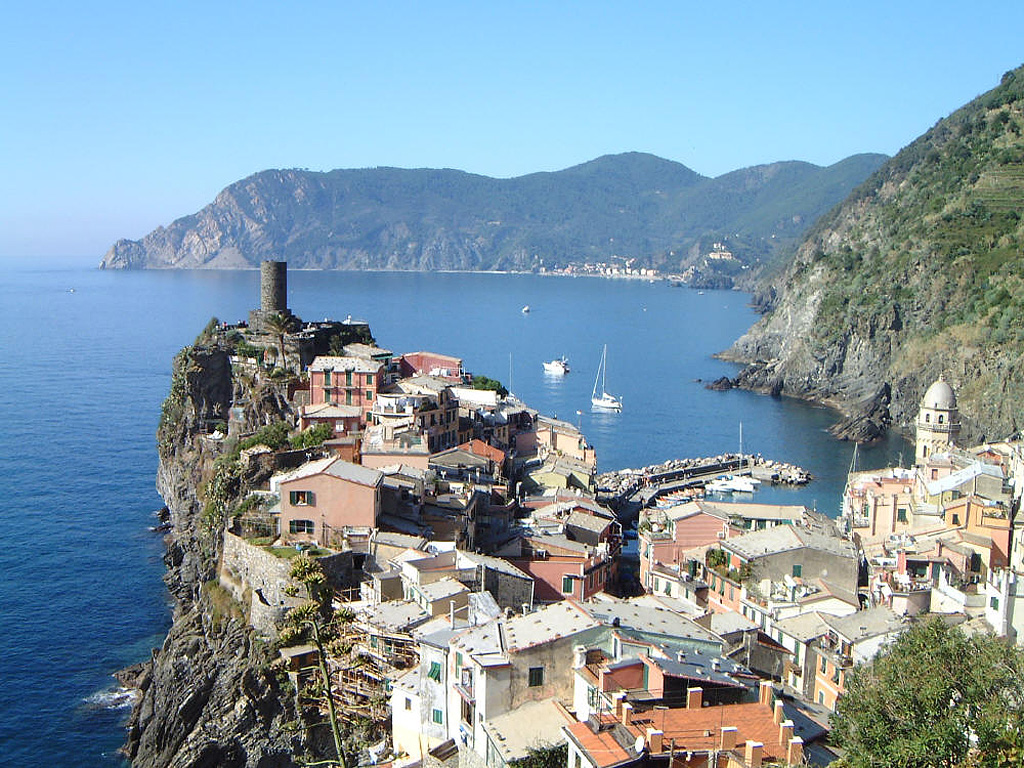
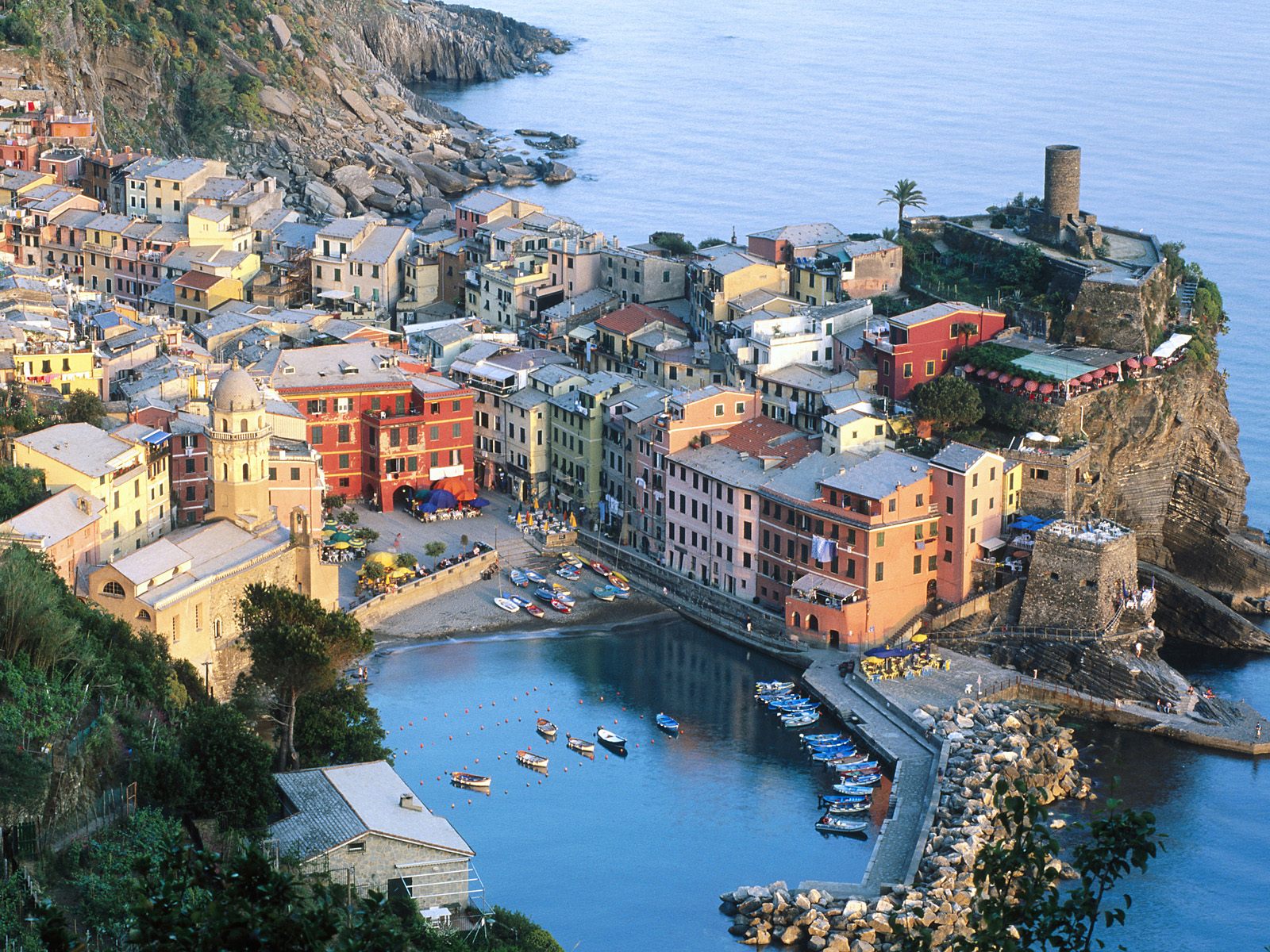
Beauty Cinque Terre in Italy

The Cinque Terre, Italy. It was a long 6 years since I last visited and I hope to remedy in September with a group of friends. Home Pesto, south-east of Genoa and Pisa to the north, the Cinque Terre are five coastal villages on the Mediterranean Sea. The photo above Vernazza - I zwommen in this bay and hiked in the hills around the village. I can not wait to go back there and see if my old friend Luigi is round and more importantly, if it were still in small production of wine DOC Cinque Terre.
The Cinque Terre is a rugged stretch of coast on the Italian Riviera. E 'in the Liguria region of Italy, west of the city of La Spezia. "The five countries" consists of five villages: Monterosso al Mare, Vernazza, Corniglia, Manarola and Riomaggiore.


The coastline, the five countries and the surrounding hills are all part of the Parco Nazionale delle Cinque Terre and is a UNESCO World Heritage Site. The Cinque Terre is known for its beauty. Through the centuries, man has carefully built terraces robust, powerful landscape of rocks with the sea. Part of its charm is the lack of vision "modern" development. Roads, trains and ships connecting the villages, and cars can not reach out. This is a very popular tourist destination.


In 1998, the Italian Ministry of Environment to set the protected marine area of the Cinque Terre to protect the natural environment and promote socio-economic development compatible with the natural landscape of the area.In 1999, the Parco Nazionale delle Cinque Terre was created to preserve the ecological balance, protection of the landscape and protect the values anthropological Site.


Wednesday, June 10, 2009

Christensen canal in Copenhagen Denmark


In Denmark you will find that the distances are short – and this makes it possible to combine all the atmosphere of buzzing city life with the relaxation of the beautiful Danish countryside. The smallest Scandinavian country has much to offer, from modern design and medieval castles to Viking remains and scenic fjords.have a fun...

Friday, June 5, 2009

Tugela Falls : The Highest Waterfall


Tugela Falls is the world's second-highest at 947 m (3110 ft) in KwaZulu-Natal province, Republic of South Africa. Tugela Falls are the world's second highest waterfall. The total drop in five free-leaping falls is 3,110 feet (947 meters). They are located in the Drakensberg (Dragon's Mountains) in the Royal Natal National Park in KwaZulu-Natal Province, Republic of South Africa. The Tugela Falls are easily viewed after a heavy rain from the main travel road into the park, glistening from the reflection of the late afternoon sun.

Tuesday, May 26, 2009

Enjoy the Anse Source d’Argent


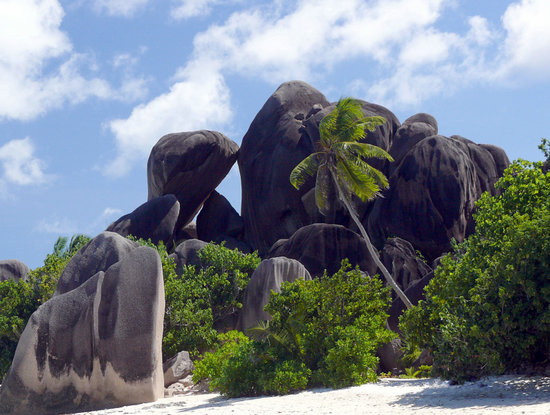
Anse Source D'Argent, the second best beach in the Seychelles is also one of the most popular.The coastline is a series of small crescent pink sand beaches separated by gigantic granite boulders which are famous for their unusual curves worn by time and weather.. The beach is sheltered by a reef, ideal for snorkeling and sun bathing. The calm waters make it perfect for the little ones.
The archipelago of Seychelles, composed of more than 100 palm tree-studded islands in the midst of the Indian Ocean, is a mostly undiscovered destination for American travelers. Dedicated beachcombers who make the trek will, however, be rewarded with some of the most paradisical shores in the world, where beautiful secluded beaches and idyllic lagoons meet with unspoiled natural landscapes echoing with exotic bird songs – don’t miss picture-perfect Anse Source d’Argent, featuring fine pink sands; towering, weathered granite boulders; and giant, arching palm trees.

Kaikoura in New Zealand

History of Kaikoura, New Zealand.
About 180,000 years ago periods of rapid uplift raised the layers of limestone and siltstone laid down on the sea-bed about 60 million years before to form the twisted and weathered outcrops that today make up the Kaikoura Peninsula. Originally an island, the peninsula has since been joined to the mainland by steep plains built up of debris swept down from the mountains in the Hapuka and Kowhai rivers.

In Maori lore the peninsula was the place where Maui braced his foot when he fished up the North Island and was named Te taumanu o te whaka a Maui ; the thwart of Maui's canoe. The name Kaikoura, meaning meal of crayfish, was given by Tamaki-te-rangi when he stopped over to eat here while chasing his runaway wives. It is likely that Kaikoura was first settled by the Waitaha followed by the Ngati Mamoe and then the Ngai Tahu tribes.

As Moa numbers declined crops and settlements became more important so they built lookouts and fortifications around their hilltop pa sites. Although they were only occupied for short times there are at least fifteen of these pa sites in and around Kaikoura with fierce battles occurring at some of them.
In 1843 Captain Robert Fyfe, reputed to be Kaikoura's earliest European settler, established "Waiopuka", the first shore whaling station near where his house, built in 1860, still stands on it's whale bone piles. Other whaling stations soon followed at South Bay but after 1850 whale numbers steadily declined and the exploitation of them became uneconomic. Today all marine mammals are protected in New Zealand and the whales are hunted with cameras instead of harpoons. Sheep and goats were introduced to the area by him in 1849 and in 1854 he was joined by his cousin George who leased an area north of Kaikoura known as the "Mount Fyffe Run" thus Mount Fyffe got it's name and farming began in the district.

Overland routes to Kaikoura were extremely difficult to travel with rough country and many river crossings. As a result most people and freight traveled by sea despite the often perilous coastline with it's changeable weather resulting in many shipwrecks. The remains of an old chimney near Fyffe House are all that is left of the former custom house, the official port of entry and the main link with the outside world for many years. With land access being improved by the construction of roads and bridges the old port was closed in 1949. The Christchurch to Picton Railway, a major accomplishment complete with 21 tunnels, was opened during 1945.

Like many rural areas of New Zealand, Kaikoura suffered from the economic downturn of the 1980's but is now on the road to recovery.

Tourism got a boost in 1989 when whale watching began. This has brought about an increased awareness of the areas varied and unique wildlife along with an amazing mixture of geological features providing scenery equal to or better than that seen anywhere.
Article from : http://www.virtual-kaikoura.com/history/history.htm
look more picture of kaikoura in new zealand above :