Imagine a harsh, eerie moonscape with sporadic vegetation sprouting in bizarre places. The visitor’s center describes plant species ranging from artic to sub-tropical thriving within the cracks and crevices of this hostile, rocky terrain. Efforts to cultivate this land resulted in unending rock walls lining the narrow roads that were truly meant for horse and cart … not modern vehicles. Somehow, the cattle, sheep, and horses graze among the rocky fissures that were formed beneath the sea a million years ago. On the southwestern edge of The Burren, the Cliffs of Moher drop dramatically to the Atlantic Ocean and extend for five miles along the coastline. During north Atlantic gales, the pounding surf rivals nature’s drama seen along California’s Big Sur.
Visitors to Ireland expect to hear traditional Irish folk music and only the early-to-bedders will be disappointed. In Doolin, a village famous for Irish music, the musicians start playing around nine o’clock. We listened to live Irish music in Killarney, Limerick, Dublin, and places in between and it’s late before the entertainment begins.
In Limerick, we stumbled on the best Irish music during our trip. The Locke had an incredible band that creatively blended traditional Irish with Bluegrass music. Anyone familiar with Riverdance will understand how the first influenced the second. Dolan’s Pub featured various local musicians who came to jam with fiddles, flutes, guitars, banjos, even spoons. They treated us to great, spontaneous Irish music and we loved it. Dolan’s also owns a concert hall that offers a litany of performances by famous groups.
 Ireland Castle
 Ireland Castle
 Ireland Castle
At O’Shea’s in Dublin, just north of the River Liffey, we enjoyed live Irish music as well as great, impromptu dancing from visitors staying at the hotel. A gracious, talented gentleman helped me kick up my heels during an easy-to-follow Irish dosey-doe. At An Pucan in Galway, we listened to an entertaining guitar player from Virginia until ten o’clock when an Irish band finally set up to play. They opened with a polka and we left.
Despite the enthusiasm for traditional Irish music, Americans won’t get homesick for their familiar tunes. When the musicians are absent, good old rock ‘n roll, blues, country western, and Motown are pervasive in pubs throughout the country.
If the Irish approached every aspect of life with the same fervor as their sports, the country would undoubtedly become a world superpower. We think our NFL players are gladiators. HAH! Watch rugby or hurling. Irish players are hard-bodied, zealous athletes who bring new meaning to the term physical contact. Rugby reminds me of American football without protective equipment or rules … any rules. Hurling is similar to rugby with the added advantage of a stick used to inflict more harm on an opponent. Imagine football, ice hockey, and lacrosse being played at the same time. That’s hurling. The Irish are passionate about their teams and entire towns turn out for the local rugby and hurling matches.
Perhaps their involvement in physically demanding sports keeps most Irishmen strong and sinewy. On the flip side, the women are full-bodied … built to give birth and suckle their young until the first pint of Guinness. Without a doubt, Irish women have breasts. Unlike the FDA-approved chests many American women proudly display, these puppies are the real McCoy! They have no need to dress like a pop-singing tart. Just a mildly scooped neckline reveals a lovely hint of healthy cleavage. I thought I had ample breasts; in Ireland, I felt like Twiggy. When hubby caught me scowling at my chest, he kindly suggested that any more than a handful is a waste. Kindness like that keeps marriage alive; ours is pushing thirty years.
 Ireland Castle
 Ireland Castle
 Ireland Castle
 Ireland Castle
Driving in Ireland is a sport all its own. American auto insurers will not cover a rental car in Ireland; rental companies mandate their own insurance and it’s expensive. In a small car with manual transmission, I concentrated on opposite-side driving while trying to master Ireland’s answer to intersections … the infamous roundabout! Despite the awkwardness of left-sided driving, I soon became adept maneuvering through roundabouts because I encountered one every quarter mile in the city. On the open highway, drivers can travel almost five miles between roundabouts. Just to keep things interesting, some roundabouts also had traffic signals. Adding to the driving challenge are narrow roads through small towns where drivers park wherever they choose… halfway on the street… halfway on the sidewalks. Few cities have bypasses to circumvent traffic around the downtown area. Hour-long backups are typical in places such as Waterford where major cross-country routes funnel all traffic across a single two-lane bridge in the heart of city. Stretches of national highway are curvy, two-lane roads with no shoulders. Regardless, the speed limit is one-hundred kilometers per hour (62 mph) until drivers reach the next roundabout on the outskirt of a town or village.
Wait! There’s more. I thought the national highways were narrow until I traveled on regional roads. Oncoming carsNarrow winding roads bordered by rock walls or hedgerows are found throughout Ireland cannot pass without squeezing up to a hedgerow or a rock wall delineating the edge of the road. There is no space on either side of the road… zero, zippo, none. Fortunately, vegetation covers many rock walls. When a car brushes against vines, a driver knows that further yielding will cause serious vehicular damage. This is particularly helpful when the approaching vehicle is a tour bus, a sixteen-wheeler, or an oversized farm tractor pulling a flatbed full of hay. While the roads are riddled with hairpin curves, shared with bikers and pedestrians, used for cattle and sheep crossings, the typical speed limit is eighty kilometers per hour (50 mph). Years ago, visitors drove for miles without seeing another car. Those days are long gone, the current road system cannot handle the traffic, and the allowed driving speeds add to the danger. The next time you seek a thrill, forget the latest mega-ride at Six Flags. Just rent a car and go for a drive in Ireland.
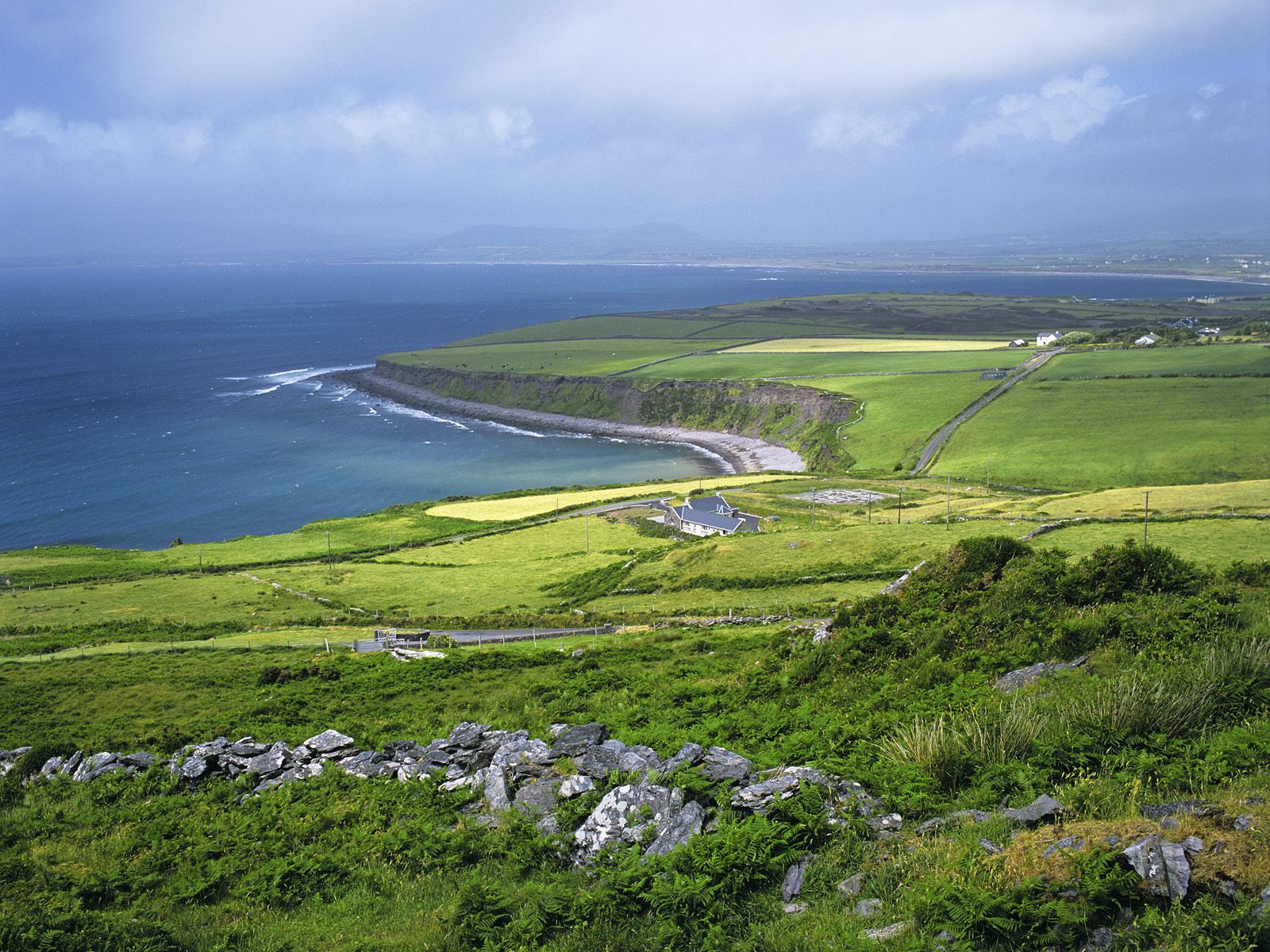


 Ireland Countryside
 Ireland Countryside
 Ireland Countryside
 Ireland Countryside
 Ireland Countryside
 Ireland Countryside
 Ireland Countryside
 Ireland Castle
 Ireland Castle
 Ireland Castle
 Ireland Castle
 Ireland Castle
 Ireland Castle
 Ireland Landscape
 Ireland Landscape
 Ireland Landscape
 Ireland Landscape
 Ireland Landscape
 Ireland Landscape
 Ireland Landscape


