Showing posts with label Stanford. Show all posts

Monday, April 4, 2011

The Center for Compassion and Altruism Research and Education

From Stanford.
You may have noticed a lack of updates lately, but that's only because all the news seems to be old news that I've already covered. Today will be a little different, in that I'm not really covering news at all but an interesting organization. It's the Center for Compassion and Altruism Research and Education (C.C.A.R.E.), which is a Stanford organization that aims to provide research into compassion. They especially focus on compassion's neurological causes and effects.

Their website is full of interesting videos on the subject, with plenty of information on current research projects as well. Even though the graphics show a heavy Tibetan Buddhist influence, all of the organization's research is secular, with some assistance from religious figures.

Anyway, I had never heard of them before, but their outlook is intriguing, so check out their website. It looks like the next news cycle is picking up, so I think I'll have more to post tomorrow!

Thursday, February 17, 2011

Marketers Teach Happiness to Sell Products

One of the most well-known campaigns to sell "happiness."
From 2010 and High Heels.
Today I read this interesting Fast Company article about a consultant who specializes in teaching corporations how to market happiness. Her name is Jennifer Aaker, and she teaches a Stanford graduate marketing class entitled "Designing Happiness". She also consults with AOL, Facebook, Adobe, and other corporations.

According to Aaker, "The idea of brands enabling happiness and providing greater meaning in the world is powerful. People have an aversion to anything that feels overly manufactured." The article also mentions John Kenny of the ad agency DraftFCB saying that nostalgia and other "safe emotions" can create happiness in an ad campaign, making happiness into a commodity used to sell products.

Students in Aaker's class create a photo project by taking pictures of happy moments for a month, then rating those moments on a scale of one to ten, thereby allowing themselves to discover moments that they didn't realize could make them happy. They apply the happiness principals they learn to a fictional company.

How do YOU feel about this corporatized streak in happiness research? We've seen before that when corporations take employee happiness seriously, they increase productivity and stock price, so everyone benefits. Happiness classes can also be a great experience for students, and Jennifer Aaker sounds like a great teacher.

HOWEVER, I sort of feel like using those principles to sell products steps over the line into creepiness. Does Coca Cola actually make people happy? No, it doesn't--at least in the longterm, after the sugar and caffeine leave your system. Coke is flavored high fructose corn syrup that will harm your body and actually ruin your smile if you drink too much, so why pretend that it causes happiness? It's the same thing with these other companies. I'm sure marketers love creating emotional links in consumers, but in the real world their products invite no emotion whatsoever. Now they seem to be explicitly using happiness as just another cynical tool used to manipulate consumers instead of a worthy goal in itself.

Maybe people will know the difference between the short-term pleasure that comes from a newly-bought item and the longterm happiness that comes from meaningful social connection and personal action. Hopefully?

Wednesday, February 9, 2011

Facebook Users May Overestimate Their Friends' Happiness

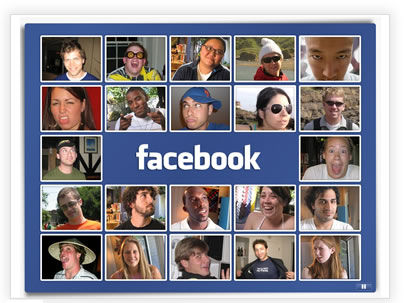
None of these people are having as much fun as you think.
From The Huffington Post.
Good news for jealous people who use Facebook:  The Times of India reports that most users overestimate the positive feelings that their friends post on their profiles. These results come from Stanford University, which surveyed students about their moods and what they thought their friends were feeling. When the researchers compared the friends' actual moods, they found that students underestimate their friends' negative feelings and overestimate the positive, which in turn made respondents unhappy because they felt less normal.

As lead researcher Alex Jordan says, "People think, 'Why am I alone on a Saturday night' or, 'Why I am not in a relationship?' When people overestimate the happiness of friends, they felt more negatively about their own lives." The study revealed that the misattribution of friends' feelings happened even between people who knew each other very well.

The more students underestimated the negative emotions of their friends, the more their feelings of loneliness increased--a trend that Catalina Toma of the University of Wisconsin says can be emotionally harmful to passive Facebook users. She writes, "People naturally compare themselves to those around them, a process known as social comparison. If you perceive yourself to be doing better than your friends in an area that is important for you the social comparison will make you feel good. However, if you think your friends surpass you in an area that's important to your self-concept, you will likely feel dejected as a result of the comparison."

You can read the actual study, "Misery Has More Company Than People Think: Underestimating the Prevalence of Others’ Negative Emotions," in the January 2011 issue of Personality and Social Psychology Bulletin (if you're willing to pay for it or you have a SAGE Journals Online account).